The church of San Lorenzo at Montiglio Monferrato: the symbolic language of its Romanesque capitals
The church of San Lorenzo at Montiglio Monferrato: the symbolic language of its Romanesque capitals
Amid stone, light and carved images, the pieve of San Lorenzo preserves one of the most fascinating cycles of Piedmontese Romanesque.
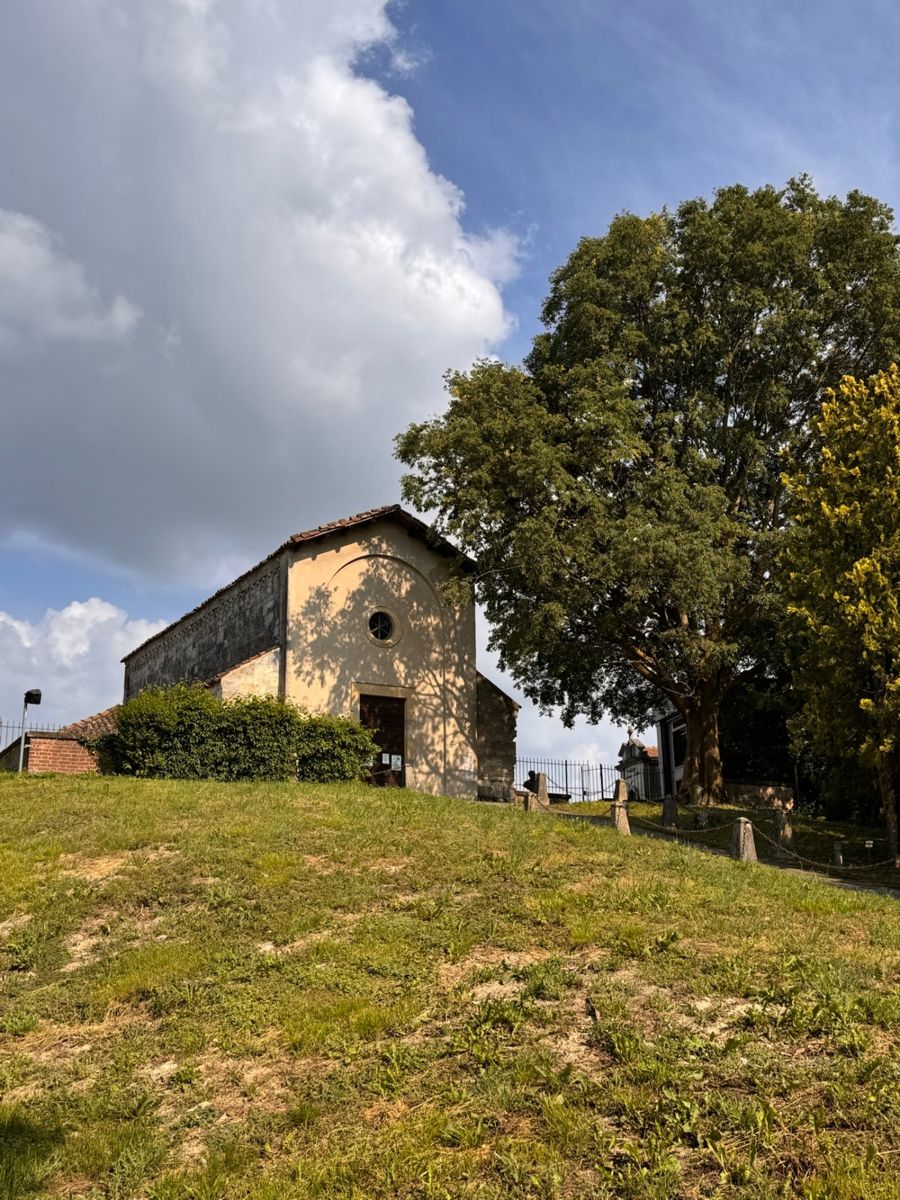
On the hills of Monferrato, just outside the village of Montiglio, the church of San Lorenzo appears today as a quiet, secluded place, but also as one of the most precious examples of Romanesque architecture in the area. Sources describe it as one of the oldest pievi of the diocese of Vercelli, with a medieval plan and sculptural decoration of extraordinary interest.
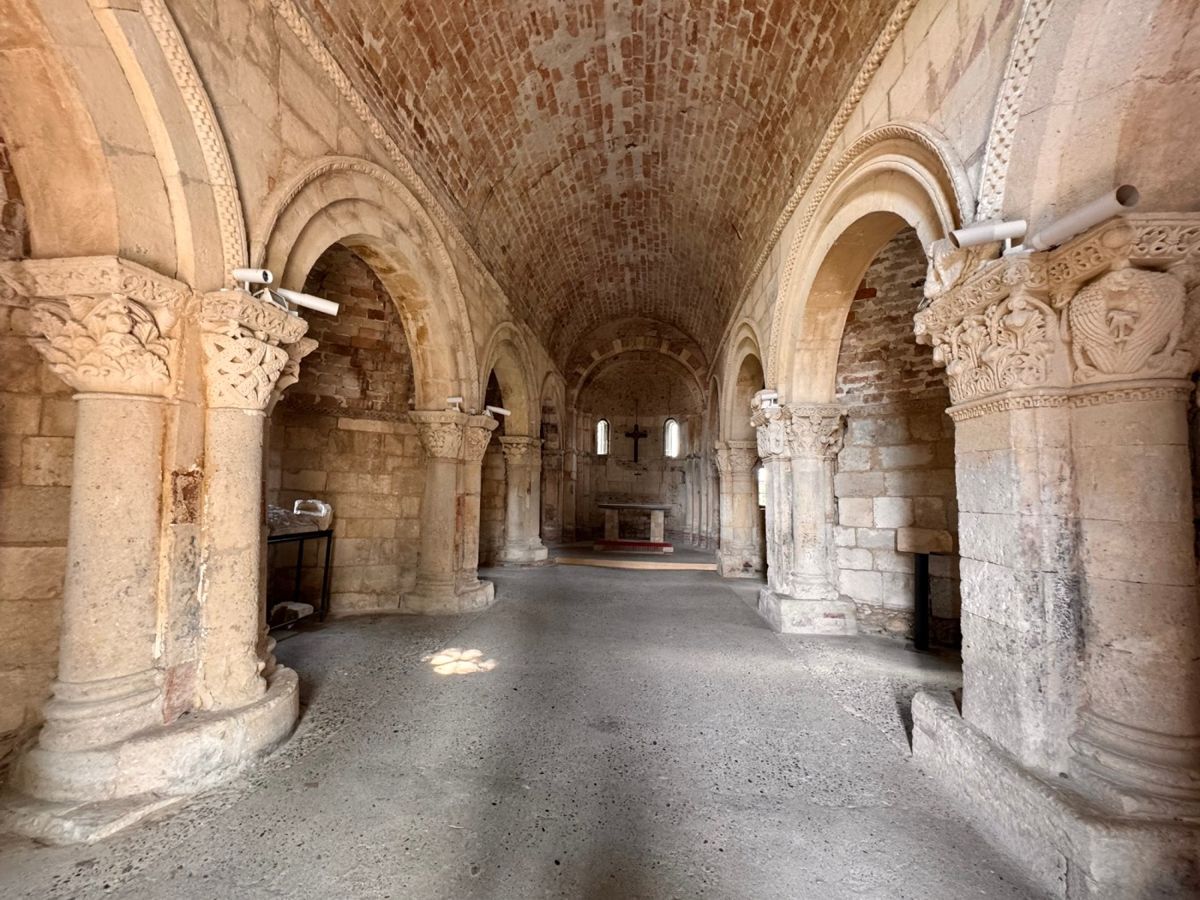
On entering the building, what strikes you is not only the sobriety of the architecture but above all the quality of the carved capitals. Here the decoration is not merely ornamental: every figure, every interlace, every animal carved in the stone seems to take part in a symbolic narrative meant to speak to the faithful, guiding them in a meditation on creation, on evil and on salvation.
A Romanesque that speaks in images
In the language of Romanesque art, the capital is much more than an architectural element linking column and arch. It is a narrative space, a surface on which stone is transformed into vision: leaves, tendrils, animals, hybrid beings and human figures make up a symbolic vocabulary that translates the great themes of medieval faith into images.
The photographs clearly show this repertoire: plant motifs, continuous interlace, facing birds, two-tailed sirens, human figures and symbolic animals alternate with extraordinary expressive force. In each case the carved form suggests a meaning that goes beyond the natural world and points to a spiritual reading of it.
The symbolism of plant motifs
One of the most recurrent themes is vegetation. Leaves, tendrils and volutes spread across the surface of the capitals in a continuous, almost musical rhythm, recalling the idea of life renewing itself. In medieval Christian culture, vegetation is not just decoration: it is an image of creation, of spiritual fruitfulness and of the promise of rebirth.
Particularly significant is the reference to the acanthus leaf, often associated with regeneration and purity. In the stone of San Lorenzo this motif comes alive and interweaves, turning the capital into a kind of symbolic tree uniting earth and heaven.
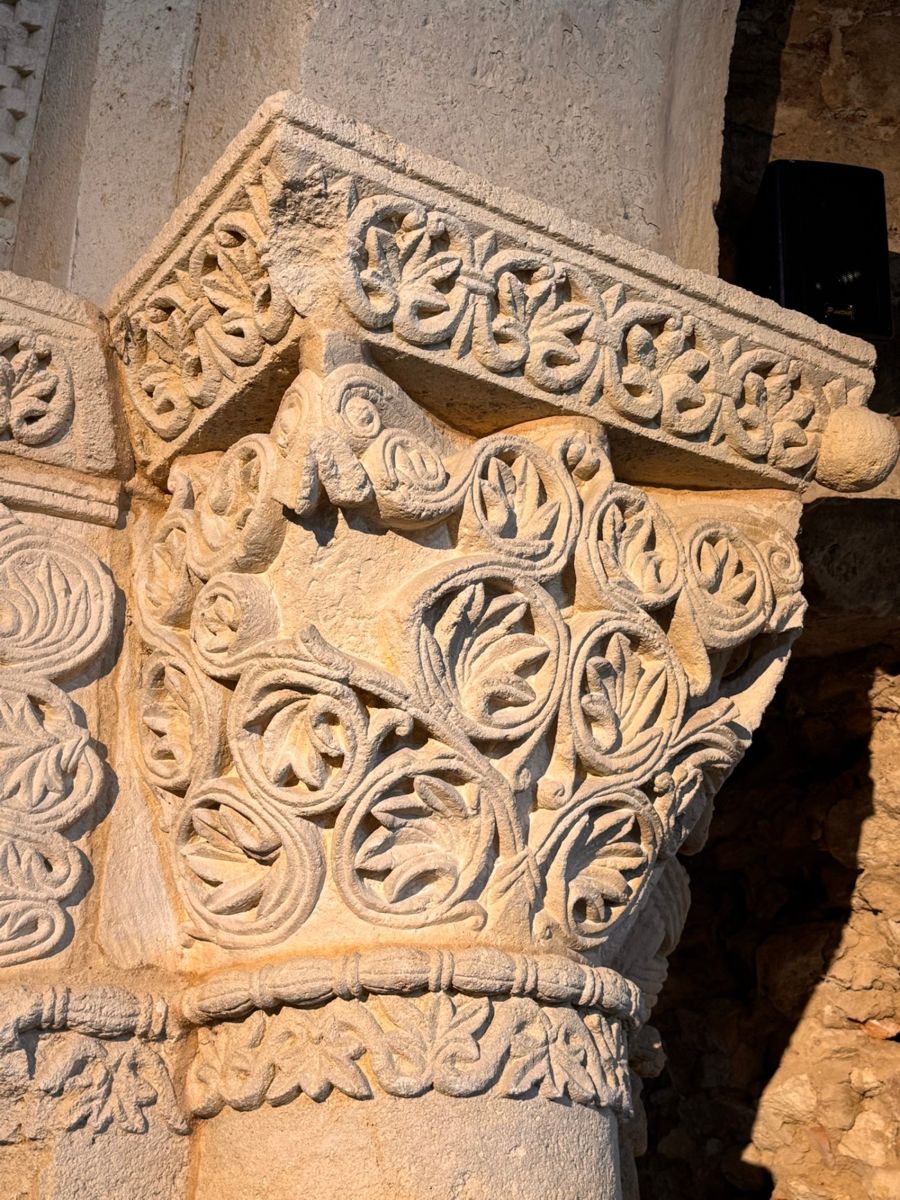
The carved leaves and tendrils evoke vitality, regeneration and the order of creation.
Interlace as an image of eternity
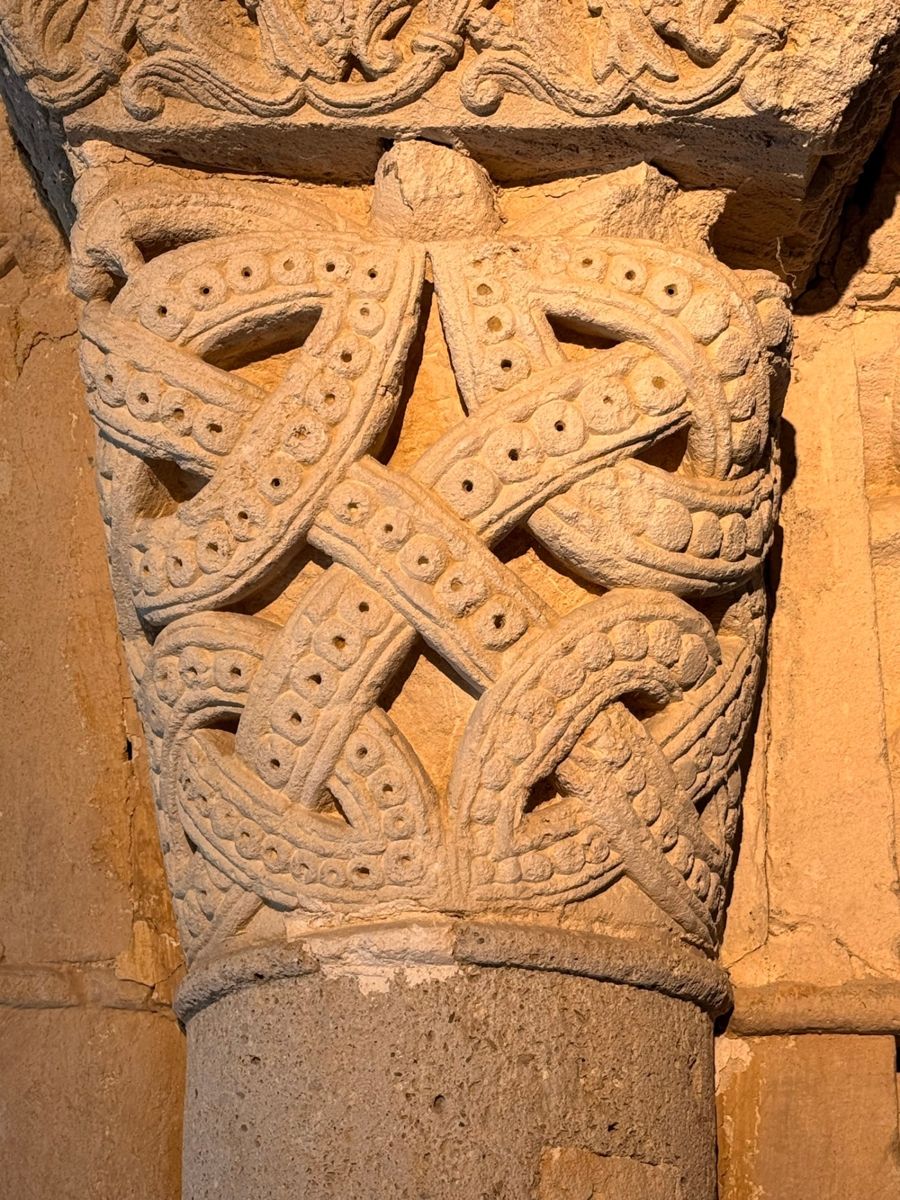
The capitals with knotted ribbons and interlaced motifs are among the most striking in the whole complex. In the Romanesque repertoire, interlace is not pure ornamental virtuosity: rather, it suggests continuity, connection, a hidden order that sustains the cosmos and links the visible with the invisible.
The unbroken knot, the ribbon that returns on itself, the geometry that unfolds with no apparent beginning or end all point to eternity and divine wisdom. In this sense, the carved stone becomes a form of visual meditation.
Birds, grapes and Eucharistic meaning
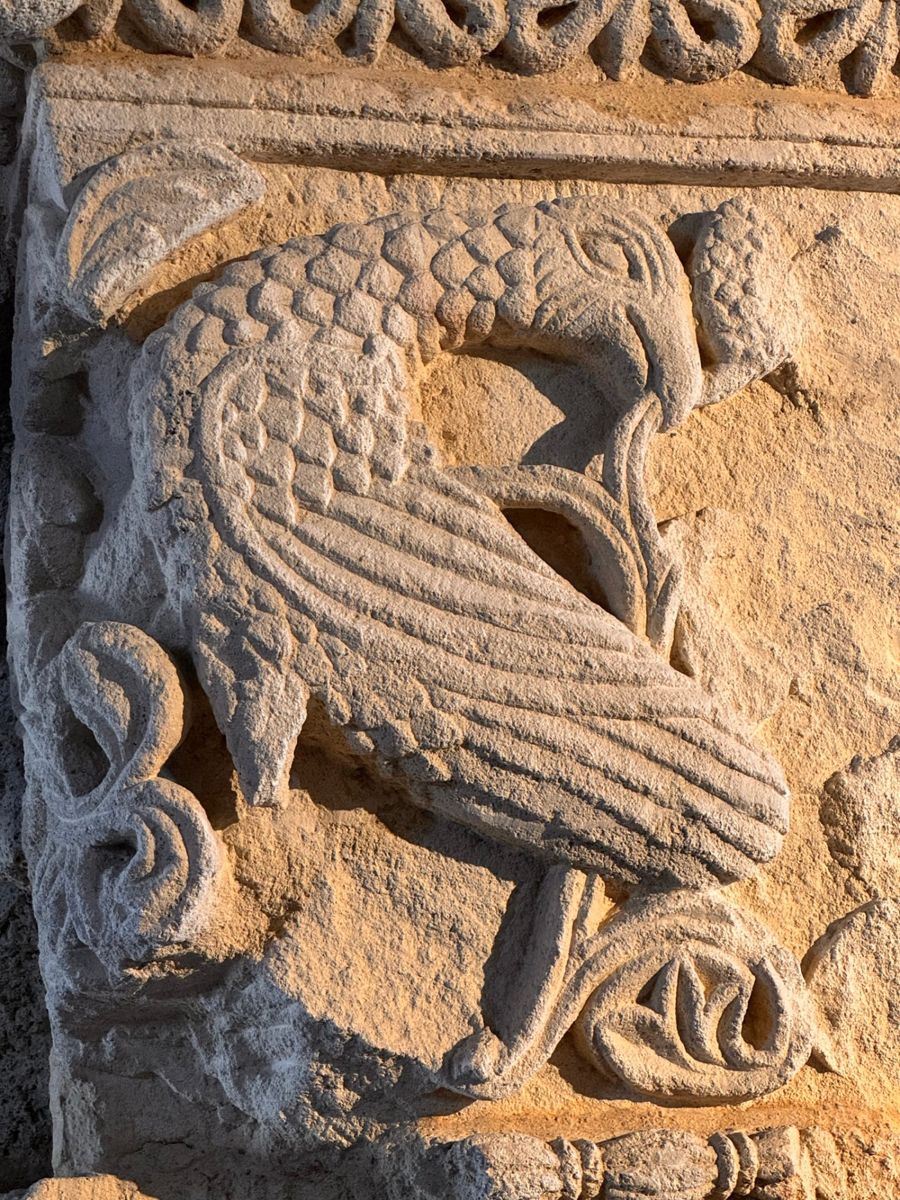
Among the most refined subjects are birds, often shown beside bunches of grapes or plant elements. In medieval Christian symbolism the bird can represent the soul rising upwards, the striving towards heaven, the spiritual dimension of existence. When the bird is paired with grapes, the reference becomes even richer. The bunch of grapes recalls wine and therefore the Eucharist, the blood of Christ, redemption: the image can be read as an allusion to the soul nourished by the divine gift.
The eagle as a symbol of elevation
The eagle or bird of prey introduces a dimension of elevation, vigilance and spiritual strength. The facing eagles or raptors reinforce this reading. Their presence in Romanesque sculpture often recalls elevation, vigilance and the ability to look beyond the earthly plane. Placed beside tendrils and fruit, these animals become part of a unified discourse on spiritual life and the promise of salvation.
Sirens and the theme of temptation
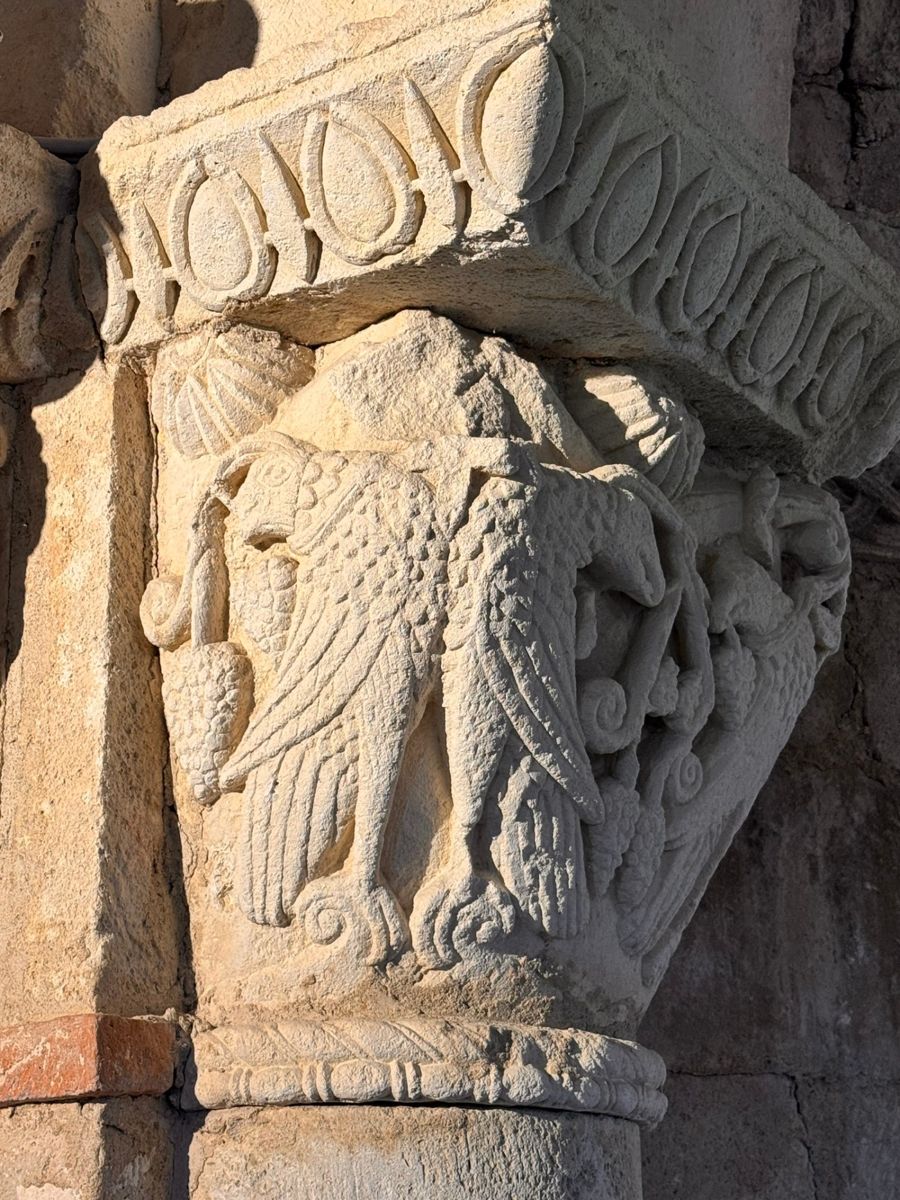
Among the most enigmatic and powerful images are the two-tailed sirens. In the Romanesque world these hybrid creatures do not have a fantastical function in the modern sense, but a moral and didactic one: they are the sign of seduction, ambiguity and the danger that turns people away from the spiritual path.
Their presence in a church is therefore not contradictory. On the contrary, they remind us that medieval sacred space also welcomed images of disorder and sin precisely in order to turn them into warnings. The stone teaches, warns and invites discernment.
Human figures and the human condition
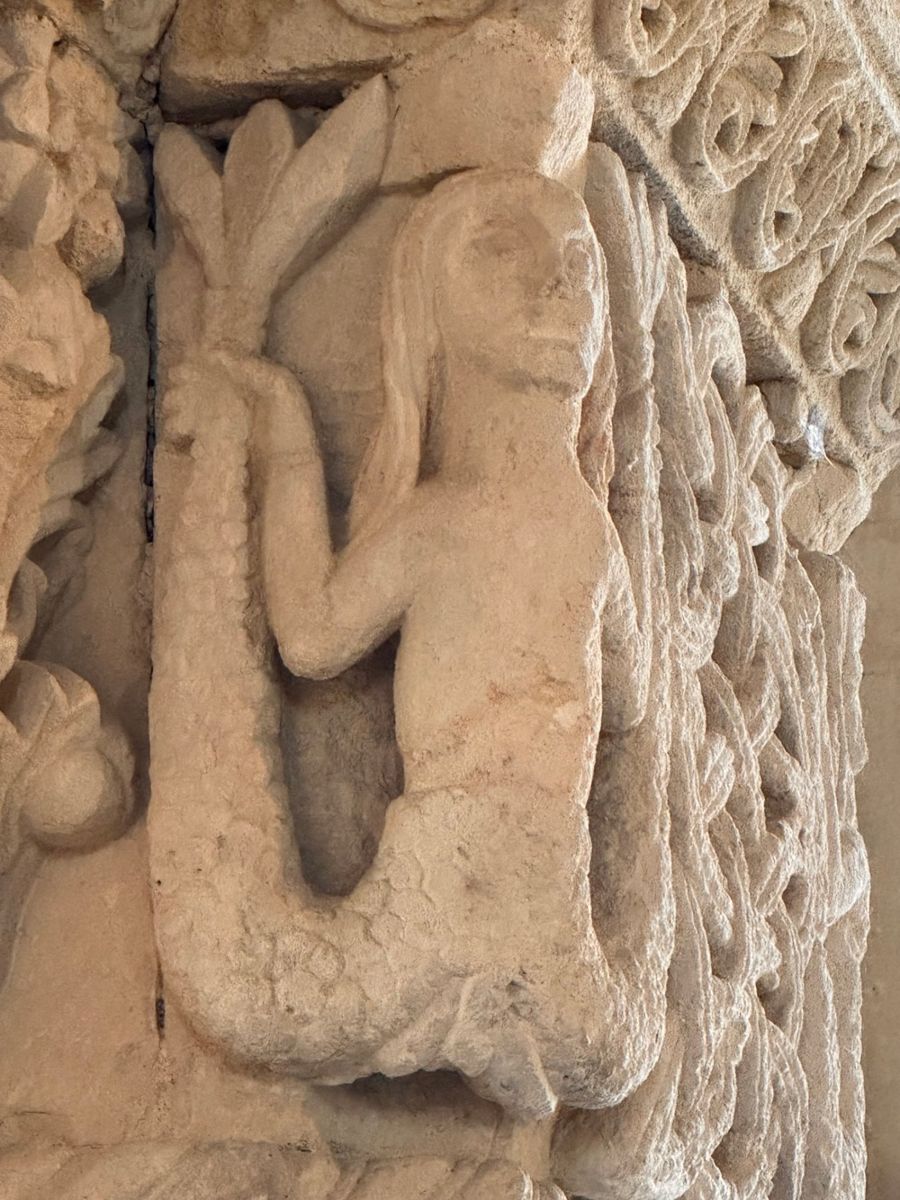
Other capitals show human figures arranged symmetrically or facing each other, immersed in a tangle of branches, volutes and grapes. These images can be read as a representation of the human condition: man and woman, body and spirit, freedom and trial, set within a larger pattern that transcends them.
The ordered yet restless composition of these figures suggests that existence is never isolated but always interwoven with a cosmic and moral order. This is one of the deepest themes of the Romanesque: humankind is not the absolute centre, but a creature called to find its meaning within the divine design.
The serpent and the sign of infinity
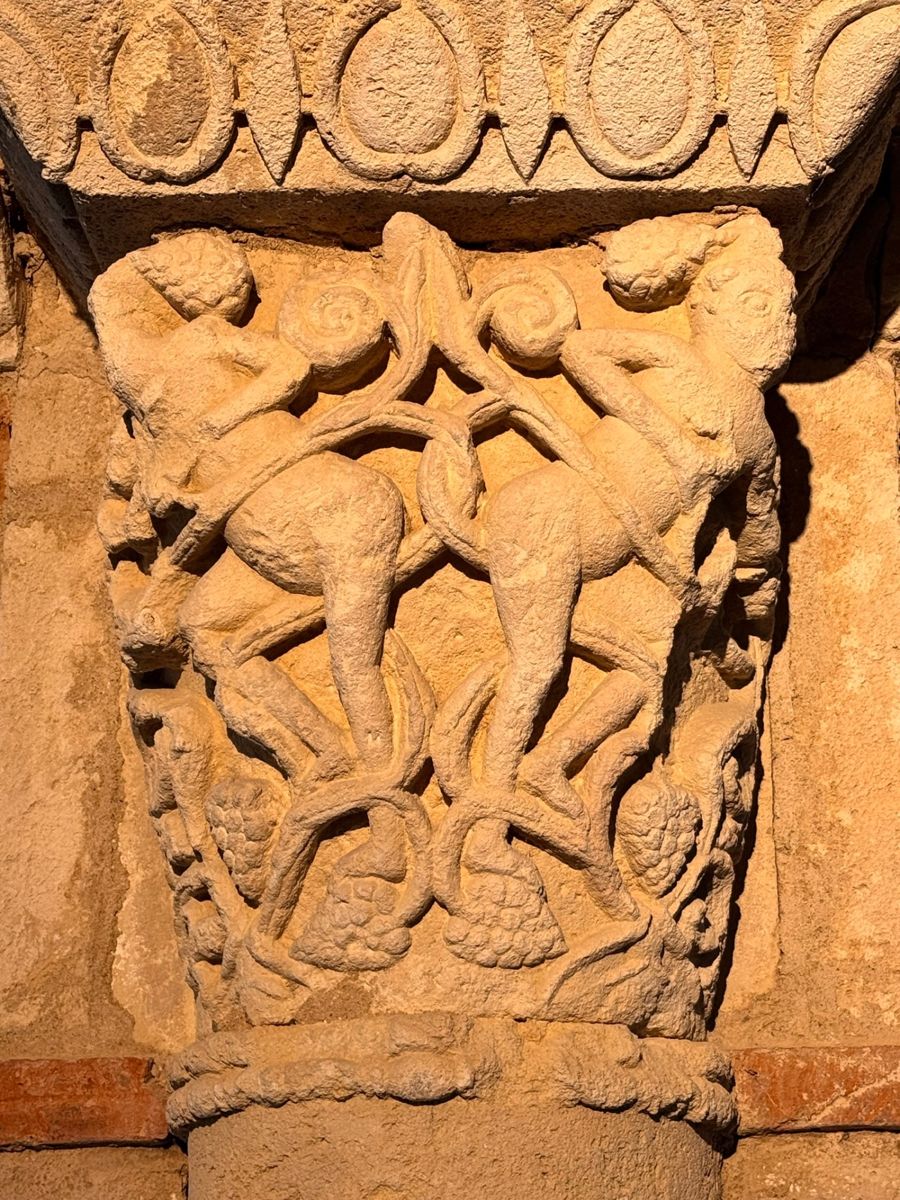
Among the most evocative decorations is the motif of the serpent with its tail folded back or intertwined, so as to evoke a shape recalling the infinity symbol. In medieval language the serpent is an ambivalent image: it can allude to evil, temptation and deceit, but also to cyclical time, regeneration and a life force that constantly renews itself.
When its body closes on itself or unfolds in an endless course, the meaning becomes even deeper. The continuous line of the body seems to suggest that which has neither beginning nor end, and thus the idea of eternity, of the cycle of life and of the tension between human transience and cosmic order. In this capital, as in many other elements of the church of San Lorenzo, Romanesque sculpture transforms a real animal into a sign that speaks at once of danger, mystery and transcendence.
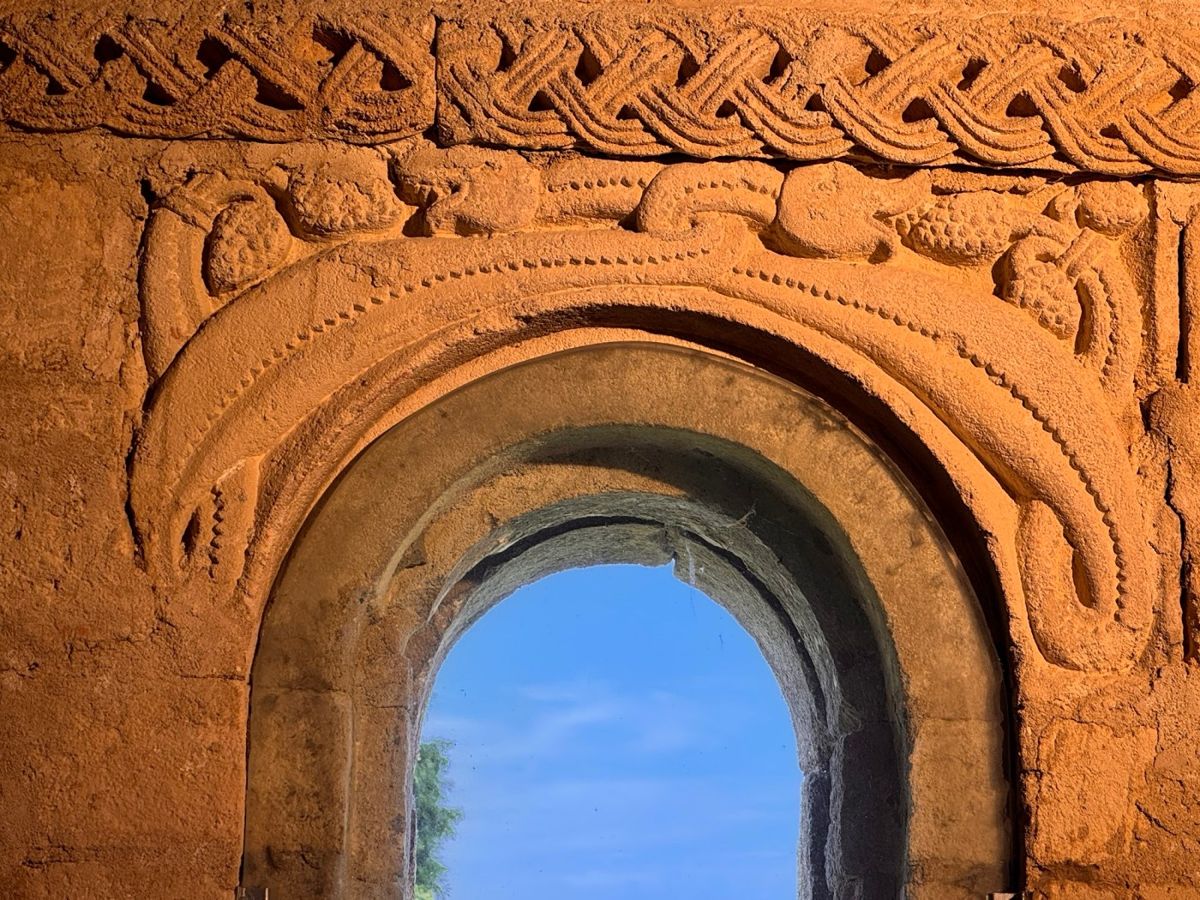
Lombard interlace
Among the most fascinating motifs in the decoration of San Lorenzo is the interlace of Lombard tradition, recognisable in the continuous flow of carved ribbons that wind, cross and close in a dense and solemn pattern. This is not mere geometric ornament: in medieval language interlace alludes to a deep order holding the world together, to the bond between human and divine, to the continuity between earthly time and eternity. The line that never breaks but returns on itself suggests a reality that transcends fragmentation and apparent disorder, turning the stone into an image of harmony, mystery and permanence.
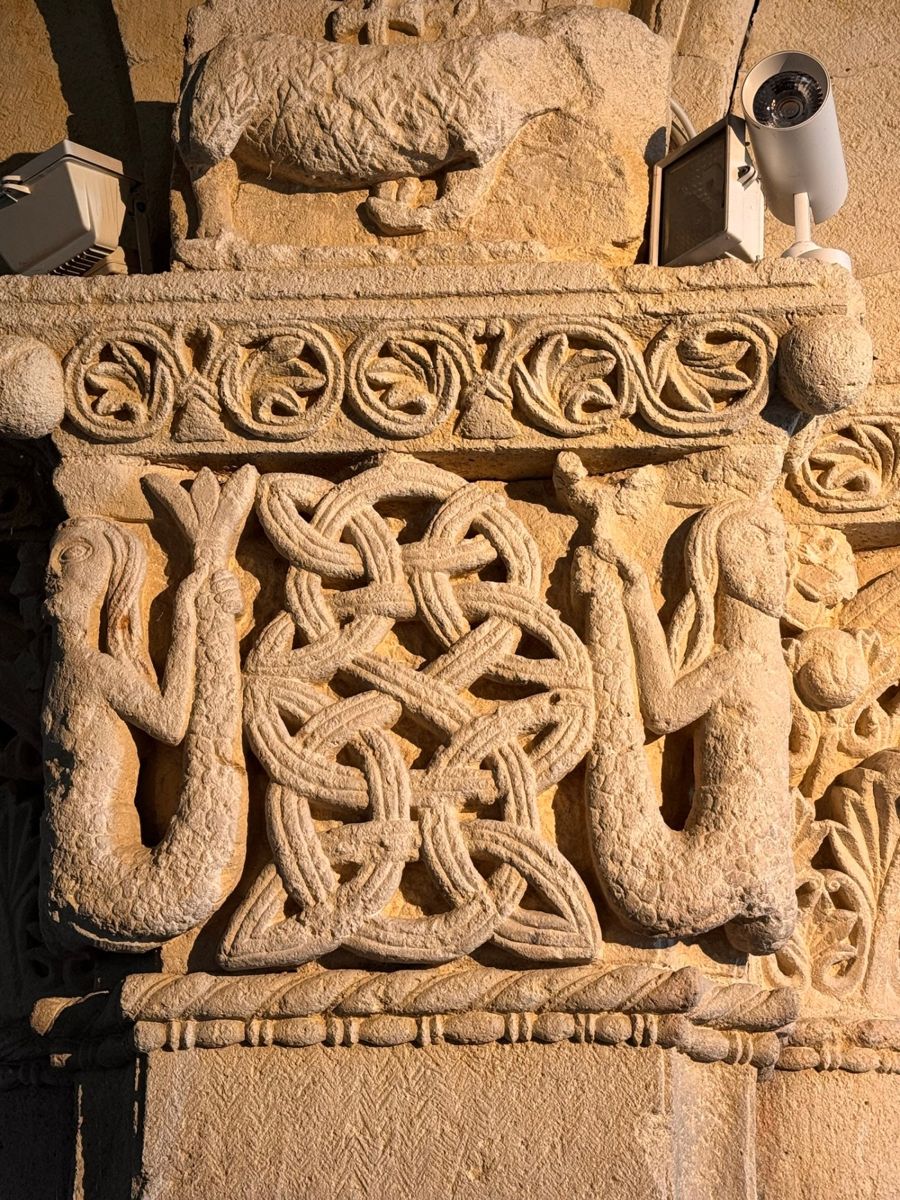
The egg-and-dart motif in the decoration of the capitals
The upper band of some capitals bears the egg-and-dart (ovolo) motif, an ornamental element of long tradition consisting of a rhythmic sequence of oval shapes. In the context of medieval decoration, this module can be interpreted not only as the revival of an ancient formal vocabulary but also as an allusion to the themes of generation, fertility and potential life.
At San Lorenzo the egg motifs, placed above animal and plant figures, help to structure the surface according to a principle of order and regular rhythm. The repetition of the motif introduces a visual cadence which, beyond its ornamental function, seems to harmonise with the wider symbolic language of the capitals, where every element helps to evoke the fullness of creation and the continuity of the divine design.
Visiting the church of San Lorenzo at Montiglio Monferrato today means coming into contact with this ancient, essential and immensely powerful language. Here the stone still speaks, through a symbolism that continues to fascinate, to question and to invite us to look beyond the surface of things.
Further reading
For a broader reading of the figurative repertoire of the capitals of San Lorenzo and their symbolic horizon in Romanesque sculpture, see also this dedicated article:
The capitals of San Lorenzo at Montiglio Monferrato: figurative repertoire and symbolic horizon in Romanesque sculpture
.
It develops more fully the themes of interlace, animal symbolism, plant motifs and the Christological synthesis present in the church's sculptural cycle.
Essential bibliography
- Città e Cattedrali, entry on the Church of San Lorenzo at Montiglio Monferrato.
- Città e Cattedrali, in-depth notes on the carved capitals of the church of San Lorenzo.
- Chiese Romaniche, entry on the pieve or cemetery church of San Lorenzo at Montiglio Monferrato.
- Piero Balestrino, La Chiesa di San Lorenzo, a study of the decoration and the capitals.
- Turismo in Collina, materials on the Romanesque churches between the Po and Monferrato.
- Encyclopaedia entry on the Pieve di San Lorenzo (Montiglio Monferrato).