Library of Mysteries
 Sacred cities and the secret Faith.
What do the sacred cities of ancient Egypt, such as Luxor, have in common with great modern metropolises like Rome, Paris or New York? Two experts in alternative archaeology guide us along the less-trodden paths of history to identify the traces of an occult religion handed down through the centuries by secret sects... A shattering discovery that could reveal the destiny of humanity...
For thousands of years the Sphinx has gazed eastwards towards infinity, capturing the  message of the stars that humanity has forgotten. And today, as our civilization seems poised at the end of a great cycle, that message is sending clear signals so that it may finally be understood. The clues are there: geology and archaeoastronomy have already indicated that the Sphinx may date back many centuries earlier than Egyptologists have so far believed. The two authors' discoveries have revealed that the Pyramids of the Giza plateau were not merely the tombs of megalomaniac pharaohs, but form a precise earthly reconstruction of the stars of Orion's Belt.
 In this wide-ranging essay Graham Hancock attempts to bring order to the chaos of human prehistory. Starting from the ancient remains of many peoples (the Great Sphinx of Egypt, the mysterious Andean temples of Tiahuanaco, the gigantic Nazca lines of Peru, the imposing pyramids of the Sun and Moon in Mexico) and comparing them on the one hand with universal myths and legends and on the other with the study of maps dating back to remote times, the author posits the existence of a people endowed with superior intelligence, in possession of sophisticated technologies and detailed scientific knowledge, whose "fingerprints", however, were completely erased by a catastrophe of immense proportions. Answering questions steeped in mystery, Hancock builds a geographical, archaeological and chronological journey with all the appeal of the best popular science.
 When the ice melted between 15,000 and 8,000 years ago and sea levels rose, the water covered more than 25,000 square kilometres of habitable land, radically changing the shape of the world. With the help of the most sophisticated computer technology for mapping the changing coastlines, the author finds striking confirmation of ancient myths. And so he puts on his wetsuit and dives in search of remains which, incredibly, are exactly where the ancient texts say they are.
Is there a secret chamber in the Great Pyramid of Giza or beneath the Sphinx? And could it be the "Hall of  Records" of Atlantis? For the academic world these are mere myths, and yet over the last thirty years the most varied organizations and groups have mounted numerous "behind the scenes" expeditions in search of the Hall of Records. In this book Bauval tells the inside story: the conflicts, the controversies, the obstacles and the attempts to conceal the truth of this fascinating story, still shrouded in mystery.
After "The Orion Mystery", in which the author set out his theory of a correlation between the pyramids  of Giza and the constellations, in this book Bauval goes further, revealing to readers the "Grand Unified Plan" that involves the temples of Upper Egypt. The core of ancient Egypt's philosophical, scientific and spiritual life was understanding how the universe works, Maat, and its mechanisms, the stars. For this reason the ancient scientists and sorcerers always sought to reproduce on Earth an exact copy of the constellations. Hence the arrangement of the pyramids along the Nile, a Milky Way on earth; read in this light, they take on new and different meanings: not tombs, but a kind of "control station" for observing celestial motions, or even, like the pyramid of Saqqara, for interacting with them.
 Does the solution to the enigma of the origins of Egyptian civilization lie in the depths of the Sahara? Is that where we must go to find traces of the "supernatural" knowledge the Egyptians had of astronomy and astrology? That is what Robert Bauval argues. Overturning the theses of academic archaeology, he finds surprising links between the ancient Egyptians and a black population that lived in the Sahara thousands of years before the rise of the pharaohs and built mysterious megalithic complexes. The recent discovery of sites such as Gilf Kebir, Uweinat and Nabta Playa shows, contrary to what "official" Egyptologists have always believed, that the Egyptians travelled "impossible" distances and forged relationships with kingdoms of sub-Saharan Africa, traces of which remain in the hieroglyphs found in the pyramids. But what secret did these peoples share with the Egyptians? What is the astronomical meaning of the megalithic complexes and of the positioning of the pyramids? What message did they want to pass on to posterity? Combining historiography, archaeology, linguistics, archaeoastronomy and the study of the alignment of the great Egyptian buildings, Bauval writes a fascinating and entirely new chapter on a civilization that still holds many unsolved mysteries.
 The author sets out to show that the science, mathematics, medicine and astronomy of the ancient Egyptians were far more sophisticated than most modern Egyptologists acknowledge; that their knowledge of the universe was the legacy of an enormously advanced civilization; and that the Great Sphinx is the geological proof of that civilization's existence.
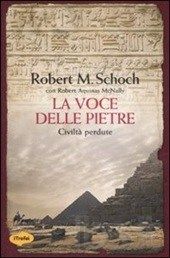 Could the Sphinx of Giza, the symbol of ancient Egypt, be a few thousand years older than official science allows? Could the great natural disasters that have punctuated Earth's history have influenced the rise and extinction of entire civilizations? Could our planet have hosted ancient cultures whose existence mainstream history ignores or denies? "Voices of the Rocks" tackles these and other questions, putting forward fascinating and scientifically argued hypotheses, such as pushing back the origin of the Sphinx and moving the beginnings of civilization to more remote times than previously believed. Following this hypothesis, it becomes possible to formulate new interpretations of some still unsolved mysteries, such as the location and disappearance of Atlantis, Lemuria and other lost cities, or the origins of the Yonaguni monument in the East China Sea. Robert Schoch's archaeological studies, which take a multidisciplinary approach, together with the analysis of natural phenomena of extraordinary scale such as meteorites, asteroids and celestial events, put themselves forward with the force of a new paradigm. Far from being a "static" body subject to gradual and imperceptible micro-changes, the Earth has tested the living beings and civilizations that have populated it, subjecting them to unpredictable and devastating catastrophes capable of upsetting their balance with permanent consequences.
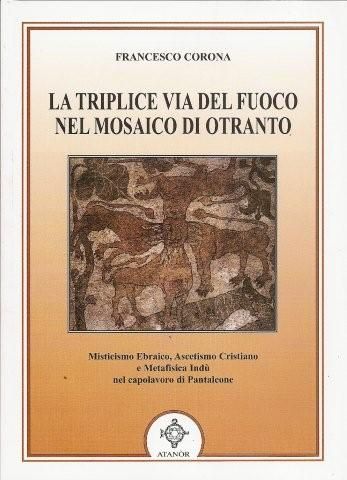 In this book the author analyses in depth every aspect of the mosaic in Otranto Cathedral and, in particular, the Tree of Life, an understanding of which allows us to retrace the stages of several religious and esoteric cultures: yoga, Jewish and Christian mysticism, gnosis.
 The Book of the Dead gathers the content of the esotericism and religion of the ancient Egyptians. The editor of this edition has managed to see behind the veil of the words and to recreate the mystery horizon that springs from this text at every step.
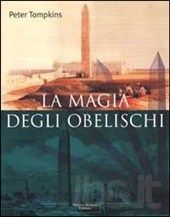 Why have all the peoples who set foot on Egyptian soil as conquerors felt a mysterious attraction to obelisks, to the point of undertaking gruelling transport operations to adorn their cities with these enigmatic monoliths? Who erected the obelisks, and why? What do the hieroglyphs carved on them mean? The strange power these monuments give off may lie in the fact that they hold a secret waiting to be discovered: the answer to the mystery of life. A magical answer, linked to ancient Hermetic rites; an interpretation of the world that must have frightened the popes, who tried to "tame" the obelisks by placing Christian symbols on top of them.
 From antiquity to the Renaissance, from Pythagoras to Kepler, arithmetic, geometry, music and astronomy explored number, space, sound and the movement of the heavenly bodies. Plato already conceived and taught these four disciplines as a unified whole, combining the study of mathematical objects with the philosophical aspiration to the true, the beautiful and the good. Distilling this age-old knowledge into splendid illustrations, "Quadrivium" gives today's reader a heritage once reserved for the few, in all its unchanged and universal beauty.
The book that has revealed to a vast number of readers all over the world the charms and traps of an Eternal Golden Braid whose strands are called artificial intelligence, the Turing machine and Gödel's theorem. A "metaphorical fugue" through the varied world that unfolds between mind, brain and computers. "Every few decades an unknown author brings out a book of such depth, clarity, range, wit, beauty and originality that it is recognised at once as a major literary event. Gödel, Escher, Bach is such a work... The structure of this book is as saturated with intricate counterpoint as a Bach composition or Joyce's Ulysses."
Martin Gardner, "Scientific American"
 "... one of the few supreme masterpieces of our century... a dense and exultant book, stretched taut on a minute knowledge of Welsh and Irish literature and of Greek and Hebrew beginnings." Elémire Zolla. "I have always believed that the great books on mythology are themselves mythological books: they inherit a great mythical tradition, gather it up, interpret it and carry it on, making those myths echo among us once more, wrapping us in their melody, infecting us with their sounds, as thousands of years ago or in that miraculous moment outside time when myth first burst into the light. Robert Graves took this principle all the way... the result is an extraordinarily rich and vivid book that suddenly has us living next to the mysterious White Goddess, to Heracles, to the sirens, to the thousand Celtic deities." Pietro Citati
 Before science, before religion, there is myth. A naive way, we are told, a fanciful, uninhibited and pre-scientific way of explaining the origin of things and of human beings, their customs, habits and laws. Philology, ethnography and anthropology have torn away the veil of myth, exposing its ideological roots and its background of superstition and magic. But myths, dissected in this way, come back to us like cold anatomical specimens, good at best for some museum. Robert Graves has managed to bring this inert material back to life, returning it to us in all its splendour, with its sense of wonder and (also) its sense of humour.
 What is the relationship between Templars and Freemasons? What historical link united them, beyond the myth built around them? All the trails lead to the most powerful religious order in the world: that of Saint Benedict. This book offers a new reading of the bond between Benedictines, Templars and Freemasons. It explains how and why the crusaders took part in a plan conceived by the monks of Cluny to establish a "new order" in the medieval world, an order that needed both soldiers and masons. In a plot that outdoes any fiction, Eduardo Callaey explains how the monks of Cluny were the true ideologues of the Crusades. It was they who created the concept of the milites, the knights who embraced a life of deep spirituality and prayer. And when Christendom sank into the torments of the Reformation, the Benedictines, the Freemasons and the Templars became the architects of a "Christian empire" aimed at restoring unity to Europe. Abbeys, castles and Masonic lodges were once again at the political centre of the ideals of restoring the ancient faith. But the swift condemnation of the popes, the fear of kings and the French Revolution halted the advance of Templar chivalry forever. "The Other Christian Empire" reveals the keys to this story.
 A widely held and accepted historical thesis points to Freemasonry as the real strategic instrument that ensured the success of the French Revolution: the lodges, permeated by the anticlerical spirit of internal currents such as the Bavarian Illuminati, are said to have been the centre of a conspiracy against throne and altar. Eduardo R. Callaey's surprising study follows the evolution of the Order through the eighteenth century in order to debunk what he shows to be a myth. Freemasonry was in no way the inspirer and architect of the French Revolution, nor of the bloody violence that stained its final act. In fact, while it is true that republican and progressive ideals circulated in eighteenth-century lodges and that many Enlightenment thinkers and Jacobins had gravitated within them, the facts show that traditional Freemasonry, Judaeo-Christian and initiatory in origin, was a victim of the revolutionary Terror and was wiped out in a fratricidal war. From its ashes a new organization would arise, closer to a political party than to a "school of mysteries", in which the goddess Reason would take the place of the Grand Masters of esoteric rites. And it was precisely this rationalist Freemasonry, child of the "century of lights", that perpetuated the revolutionary and conspiratorial myth, arbitrarily obscuring the Order's other soul.
 Egyptian mummies in the Grand Canyon. A secret chamber in the pyramid of Cheops. A relief map millions of years old. Carvings of dinosaurs that experts date to the Stone Age. A five-thousand-year-old launch pad. A prehistoric observatory. Thousands of gold and stone artefacts that seem to be the work of an unknown civilization. Hundreds of finds and monuments call our present knowledge into question and embarrass official science. Most of the time, even their existence is not made public. Luc Bürgin has gone hunting for these unusual finds, tracked them down, analysed and catalogued them, and gathered documents, testimonies and a remarkable collection of photographs.
 Who are the Basques? Their origin is still shrouded in mystery today. The author puts forward a bold and evocative answer: the Basques may be the last descendants of Cro-Magnon man, an ancient variety of "Homo sapiens sapiens". The Cro-Magnon civilization would have left the paintings of Lascaux and Altamira and the megalithic monuments, and only in the Basque Country would it have survived intact.
"This book, from the pen of a former occultist and former surrealist like Louis Pauwels, with the collaboration of that singular scientist and mythographer Jacques Bergier, is neither a novel, nor a work of science fiction, nor a record of bizarre facts, nor an exposition of Hermetic teaching, though it offers us a little of all these things together. It is a kind of rhapsody of new hope, of the great adventure that the boundless horizons opened up by the latest scientific discoveries offer humanity, a hope that in turn reconnects with the dreams and legends that, through the centuries, have been nourished by magic and occultism and have been the preserve of mysterious initiatory sects." Sergio Solmi.
 The Egyptian pyramids, Machu Picchu, Stonehenge and many other ancient monuments trace a grid of precise geometry across the Earth's surface. And more: using the theory of Earth crust displacement, it is even possible to calculate the position of sacred sites not yet known. These studies have required years of work and comparison, but they have now reached truly astonishing conclusions. They reveal that the first human civilization dates back almost one hundred thousand years and that, just north of present-day Antarctica, under a crust of ice a mile thick, lies the lost city of Atlantis.
 From the secrets of the ancient Egyptians to the most controversial episodes of alien contact around the world, from the Gate of the Sun at Tiahuanaco to the enigma of the Dogon, a journey into one of the most debated enigmas of our time: is there intelligent life on other planets or in other worlds? And are these worlds in contact with ours? A study that analyses a multitude of mysterious events: ancient gods, legendary monsters, inexplicable phenomena, psychic journeys, time slips, sensational cases of "abduction". Right up to an evocative final solution.
 In the mists of time, when ice did not yet cover Antarctica, an extraordinary civilization developed on Earth, in possession of highly advanced scientific, mathematical and astronomical knowledge. A terrible cosmic catastrophe destroyed it, but it left behind mysterious traces...
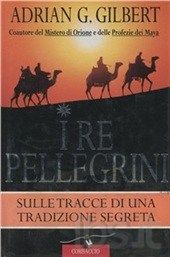 'When they saw the star, they rejoiced... and on entering the house they saw the child with Mary his mother, and they knelt down and worshipped him; then, opening their treasure chests, they offered him gifts of gold, frankincense and myrrh.' The story of the Magi is among the best known and best loved in the Gospel of Matthew, and among those that have most inspired sacred art and popular devotion. But who really were these three wise men, witnesses to the birth of Jesus? From which lands of the East did they come? And why had they come to Jerusalem?
The fruit of twenty-five years of historical, archaeological and astronomical research, Adrian Gilbert's book sheds light on these and other questions, going back to the Eastern sources of the legend of the Magi, reconstructing its initiatory meaning and retracing the history of these mysterious figures and their tradition, from their Egyptian and Mesopotamian origins to their surprising twentieth-century developments.