The Terramare civilization
The Terramare civilization flourished in about 1800-1300 B.C., a period when the world was transitioning from the Stone Age to the Bronze Age.
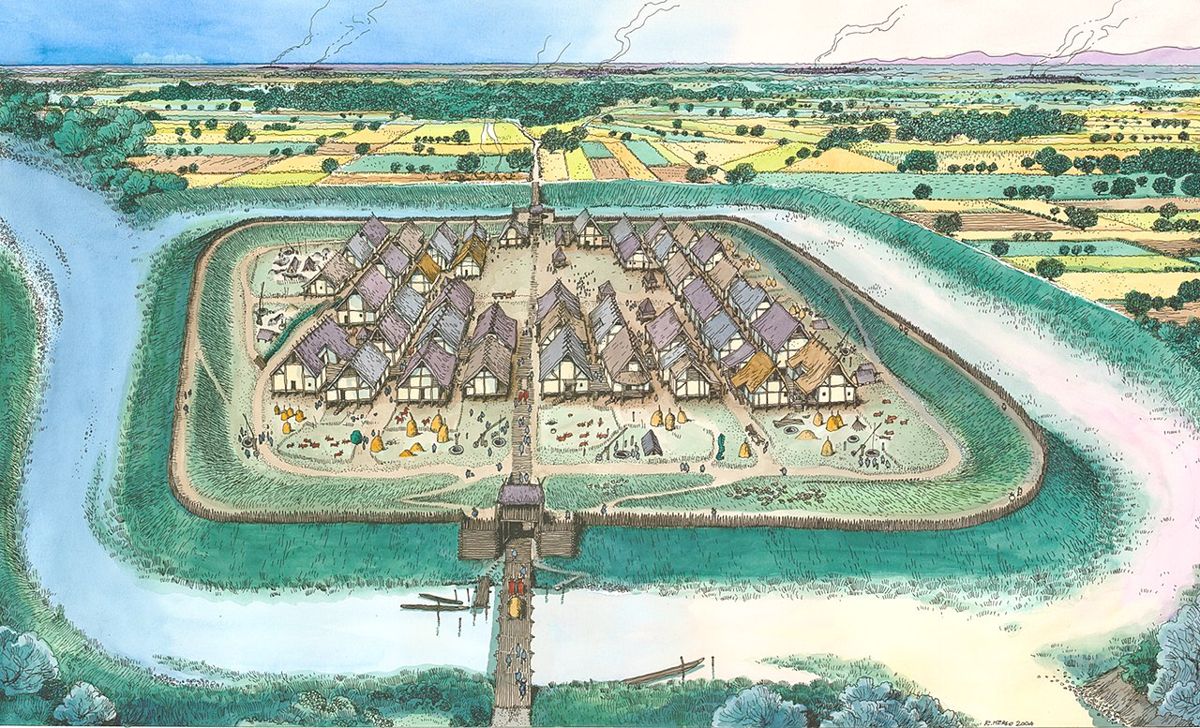
The Terramare culture developed in the central part of the Po Valley, particularly in Emilia-Romagna, and was characterized by the use of bronze technology. This was mainly used by the people who worked metals to create useful objects such as tools, weapons, jewelry and ritual objects. It is believed that the Terramare people also engaged in agriculture and animal husbandry. They also mined iron ore for the creation of bronze tools and weapons.
The Terramare people lived in villages of stilt houses built of wood and mud bricks, surrounded by ditches.
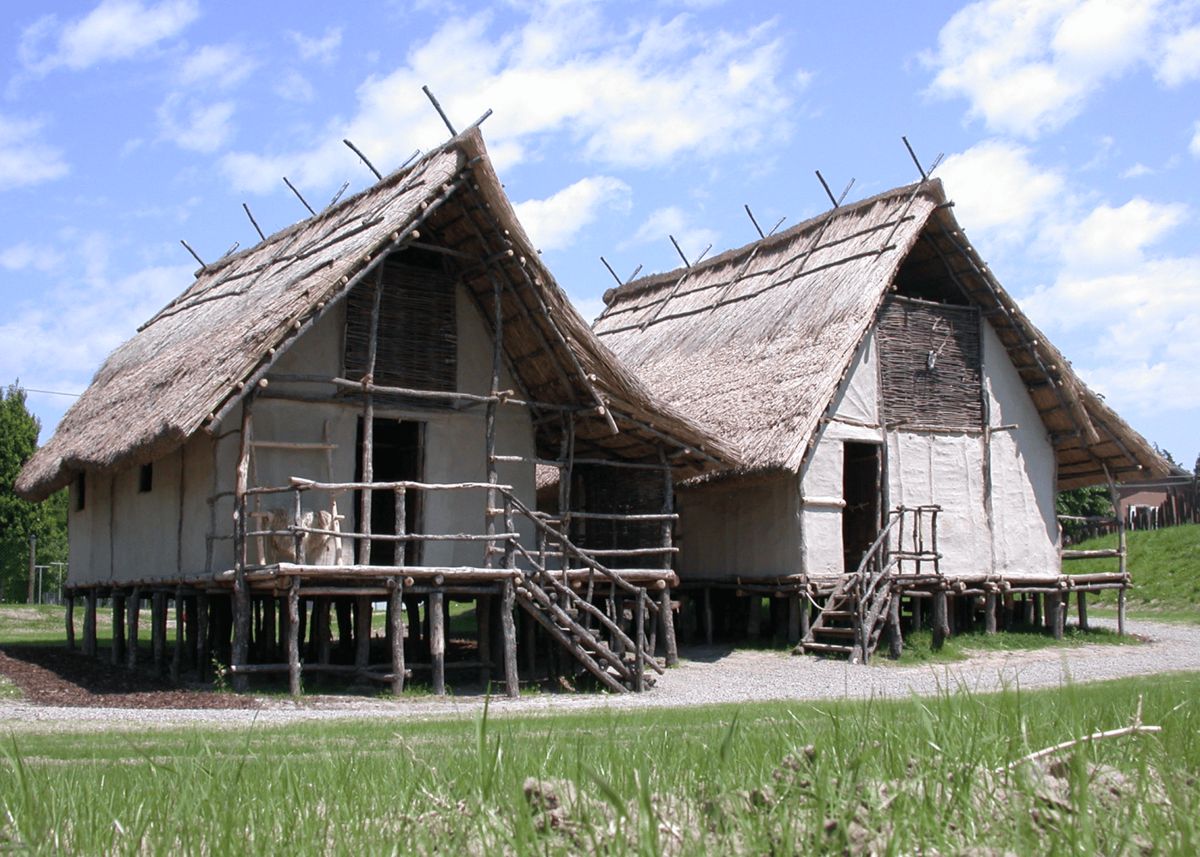
The name terramara comes from terra marna, a term used by 19th-century agronomists to designate the fertilizing loam obtained from multi-layered archaeological deposits dating back to the Bronze Age. These deposits, produced in the Bronze Age during the life of the villages as the remains of dwellings gradually built up, formed mounds up to 4-5 meters high, which were still a characteristic feature of the Po Valley landscape in the 19th century. During the nineteenth century these mounds were mostly destroyed by quarrying aimed at recovering the topsoil, which was sold as manure, mainly for spreading on permanent meadows used for fodder. The term terramara thus has an agronomic origin, but it later remained in use in archaeological literature to indicate, to this day, the Bronze Age villages of the Emilian area.
Though the Terramare people lived in houses and villages built of wood and mud bricks, they were considered an advanced civilization compared to others of the time.
The Terramare people were mainly farmers and smiths. They were skilled craftsmen and lived in small settlements along the shores of the sea and rivers. They had good relations with other civilizations, such as the Mycenaean Greeks and the Hittites, who traded with them to obtain artifacts such as copper objects and luxury goods such as wine and oil. They were also skilled in pottery and weaving.
Although little is known about their culture, archaeologists have discovered many bronze objects that reveal much about them. These include swords, daggers, shields, axes, bowls, pots and cooking utensils, as well as jewelry and decorative items. These artifacts provide fascinating information about the lifestyle of this ancient culture.
The inhabitants of the Terramare civilization also developed sophisticated irrigation systems that enabled them to farm year-round. They built dams to protect their fields from flooding and cultivated a variety of crops including wheat, barley, grapes and olives. The Terramare people were also skilled fishermen and sailors who traveled long distances to trade with neighboring communities. The discovery of some shipwrecks in the Mediterranean Sea has shown that they sailed as far as the island of Crete and North Africa.